Shopify Store Examples
Looking at real Shopify store examples can help beginners understand what a strong ecommerce store looks like in practice. The best examples are not useful because they are “famous.” They are useful because they show clear product positioning, strong visuals, simple navigation, helpful product pages, trust signals, brand consistency, and a smooth path to purchase.
This beginner-friendly guide highlights Shopify store examples across fashion, home, electronics, subscriptions, jewelry, food, beauty, digital products, and lifestyle categories. More importantly, it explains what you can learn from each example before building your own Shopify store.
Shopify store examples are useful when you study them the right way.
Many beginners look at successful stores and only notice the surface: the colors, homepage hero image, animations, large photos, or brand name. But those details are not the full reason a store works.
A strong Shopify store usually has a clear audience, a focused product offer, trustworthy product pages, simple navigation, good photography, consistent branding, useful content, and a buying path that does not create unnecessary friction.
This guide is not a list of stores to copy. It is a learning guide. The goal is to look at different Shopify examples and understand what each type of store teaches you about ecommerce strategy, design, product presentation, and customer experience.
Last checked: May 11, 2026. Store designs, product lines, platform usage, and website features can change over time. Always review current store pages directly if you use any example for design research.

Quick Answer
The best Shopify store examples for beginners are stores that make product value clear, use strong visuals, organize products logically, answer customer questions, build trust, and make checkout easy. Do not copy their design blindly. Instead, study how they present products, explain benefits, guide visitors, and support the buying decision.
Study design
Look at layout, photography, product pages, navigation, mobile experience, and checkout path.
Study strategy
Look at audience, positioning, product focus, pricing signals, trust, and content structure.
Study fit
Apply only ideas that fit your own product, catalog size, budget, brand, and customer needs.
How to Study Shopify Store Examples
Before reviewing examples, use a structured method. Otherwise, you may only collect visual inspiration without learning anything useful.
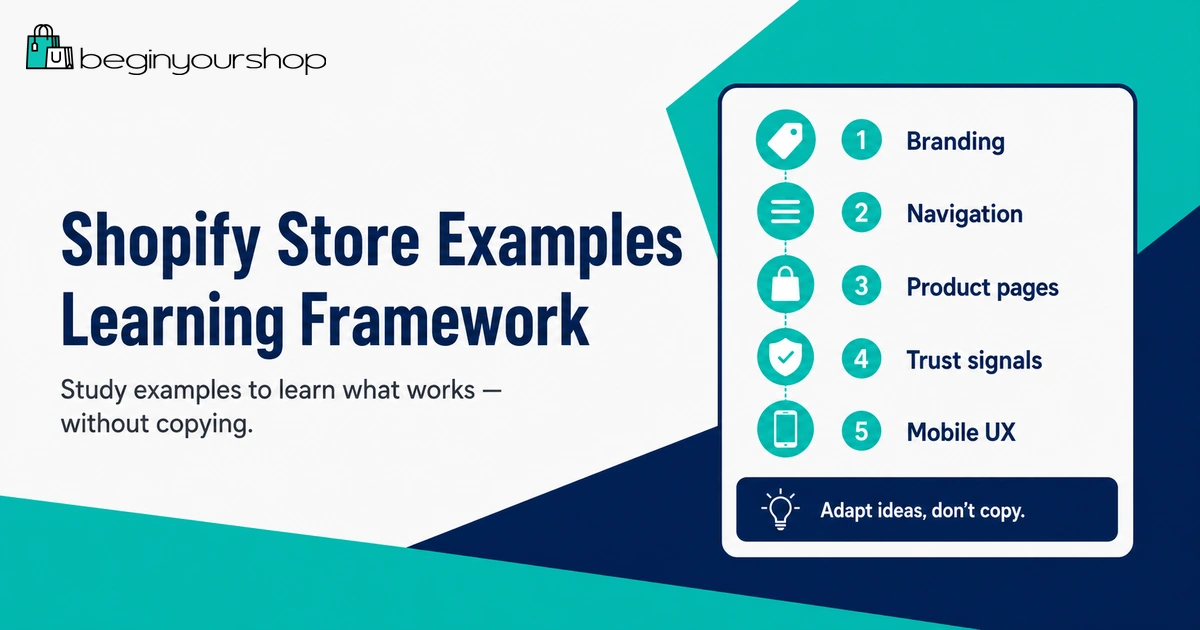
Questions to ask when studying a store
- What does the store sell?
- Who is the target customer?
- What is the main value proposition?
- How quickly can a new visitor understand the offer?
- How is the homepage structured?
- How are collections organized?
- How clear are the product pages?
- What trust signals are used?
- How does the store handle shipping, returns, FAQs, or support?
- What content helps customers decide?
- How does the mobile experience feel?
- What should you avoid copying because it only works for that brand?
Do not judge a store only by how attractive it looks. A store can look beautiful and still be hard to shop. A strong ecommerce store should be both visually appealing and commercially clear.
Beginner takeaway: Use store examples to learn principles, not to copy layouts. Your store needs to fit your own products and customers.
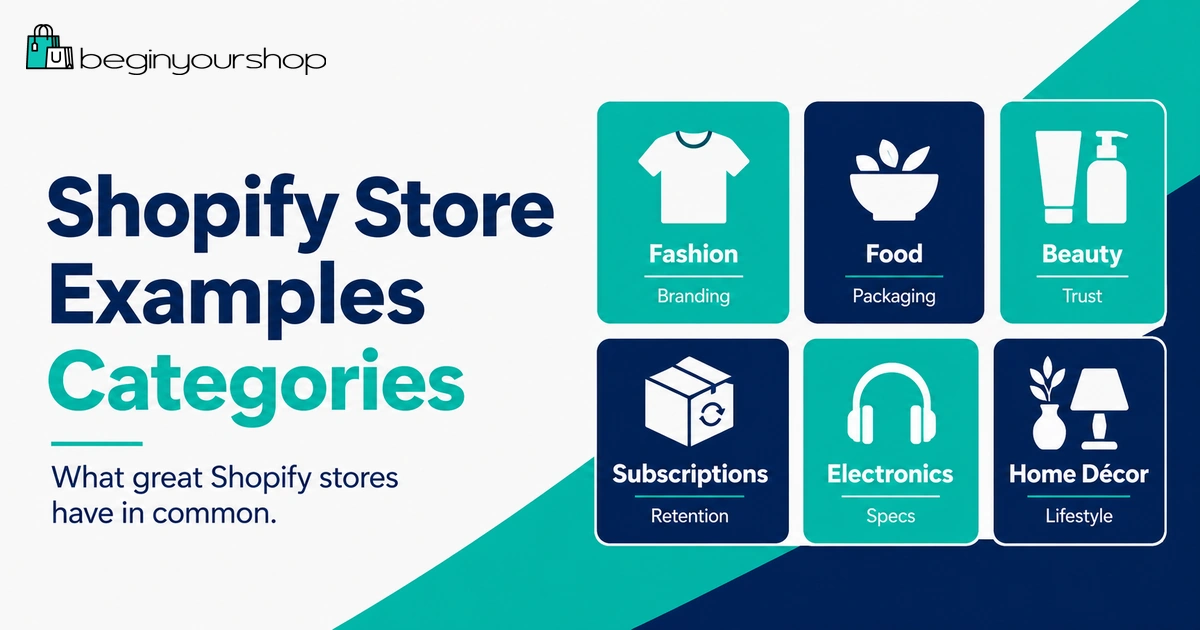
What Great Shopify Stores Have in Common
Successful Shopify stores can look very different, but many share similar fundamentals.
| Element | Why it matters | Beginner lesson |
|---|---|---|
| Clear positioning | Visitors quickly understand what the store sells and why it is different. | Write a clear homepage hero message before designing complex sections. |
| Strong product photography | Customers cannot touch products online, so images do much of the selling. | Use clear product photos before spending heavily on advanced design. |
| Simple navigation | Customers need to find products without thinking too hard. | Use obvious menu labels and logical collections. |
| Helpful product pages | Product pages answer questions and reduce purchase hesitation. | Add details about size, materials, use, delivery, returns, and what is included. |
| Trust signals | Customers need confidence before paying a new store. | Use clear policies, contact information, reviews, guarantees, or brand story where appropriate. |
| Mobile usability | Many shoppers browse and buy on phones. | Test product pages, menus, images, cart, and checkout on mobile. |
| Consistent brand voice | A consistent brand feels more trustworthy and memorable. | Keep tone, visuals, colors, and product descriptions aligned. |
Fashion and Apparel Shopify Store Examples
Fashion stores need strong visuals, clear product organization, good product filtering, size information, return clarity, and brand identity.
Hiut Denim Co.
Hiut Denim Co. is often referenced as an example of a focused apparel brand. The key lesson is focus. A denim brand does not need to sell every clothing category to be strong. It can build trust around craftsmanship, quality, fit, and brand story.
What beginners can learn:
- A narrow product focus can make positioning stronger.
- Product pages should explain quality, fit, and materials clearly.
- Brand story can support premium pricing when it feels specific and credible.
Tentree
Tentree shows how a product brand can connect commerce with a mission. Its environmental positioning gives customers a reason to care beyond the product itself.
What beginners can learn:
- A mission can strengthen brand identity if it is real and visible.
- Impact messaging should be connected to products, not hidden on a separate page only.
- Sustainability claims should be specific, not vague.
Maguire Shoes
Maguire Shoes is a useful example for fashion and footwear stores because it shows how lifestyle imagery can support product positioning. Footwear customers often need to see style, outfit context, and product details.
What beginners can learn:
- Lifestyle images help customers imagine use.
- Product pages need clear sizing, materials, shipping, and return information.
- Fashion stores should balance visual storytelling with practical buying details.
Rothy’s
Rothy’s is an example of a brand combining sustainability, product innovation, and consistent design. Its product presentation reinforces both style and material story.
What beginners can learn:
- Explain what makes the product different in simple language.
- Use product images to show color, shape, material, and lifestyle context.
- If sustainability is part of your positioning, make it visible and specific.
Art and Home Décor Shopify Store Examples
Art, stationery, home décor, and lifestyle stores rely heavily on photography, mood, detail shots, and brand atmosphere. Customers often buy because of taste, story, and emotional fit.
Uppercase magazine
Uppercase is a useful example for content-led commerce. It shows how editorial identity and products can support each other.
What beginners can learn:
- If your brand has content, use it to build trust and community.
- A store can sell physical products while also feeling like a publication or creative platform.
- Consistent visual style matters in creative categories.
Artisaire
Artisaire focuses on a specific craft: wax seals and related products. The lesson is specialization. A focused craft store can feel more authoritative than a broad generic gift store.
What beginners can learn:
- Specialization can make a store more memorable.
- Product education matters when customers may not know how the product works.
- Detailed images and process explanations can build confidence.
Silk and Willow
Silk and Willow is a good example for premium event, wedding, and décor brands. The buying decision is emotional and visual, so the store experience needs to feel refined and trustworthy.
What beginners can learn:
- Premium products need premium presentation.
- Soft storytelling can work well when visuals are strong.
- Customers buying for events need clarity around color, size, timing, and delivery.
GOODEE
GOODEE shows how curation and values can shape a home goods store. Rather than presenting products as isolated items, the brand can connect them to makers, materials, and lifestyle.
What beginners can learn:
- Curation can be a selling point.
- Product stories can make home goods more meaningful.
- Values-based positioning needs clear product and maker details.
Electronics and Gadget Shopify Store Examples
Electronics and gadget stores need more customer education than simple fashion stores. Customers need to understand features, benefits, compatibility, price justification, and support.
Bruvi
Bruvi is an example of a product that needs explanation. Coffee systems, devices, and consumables require customers to understand the product ecosystem before buying.
What beginners can learn:
- Explain how the product works before pushing checkout.
- Use sections for features, use cases, sustainability, and product comparisons.
- High-consideration products need more education than low-cost impulse products.
Pela
Pela is a useful example for accessory stores because it combines device compatibility with environmental positioning. Phone case shoppers need to quickly find the right device model and style.
What beginners can learn:
- Filters and compatibility tools matter when products fit specific devices.
- Eco positioning should be specific and linked to product materials.
- Navigation should help customers find the correct product quickly.
Cowboy
Cowboy sells a higher-ticket product, so the store needs to do more than show photos. It needs to build confidence, explain features, and reduce risk.
What beginners can learn:
- Expensive products need education, proof, support details, and strong visuals.
- Video can help explain product experience.
- Booking, demos, or trial experiences can support high-consideration purchases.
Subscription Shopify Store Examples
Subscription stores need to explain what customers receive, how often they receive it, how billing works, whether they can cancel, and why recurring delivery is useful.
Cocolab
Cocolab is a subscription-style example where product variety and recurring experience matter. Subscription customers need to understand what makes the box interesting over time.
What beginners can learn:
- Explain what is included in each box or delivery.
- Make subscription terms clear before checkout.
- Use product images to show variety and experience.
Loot Crate
Loot Crate shows how a subscription can be built around fandom and niche identity. The product is not only the items; it is also the theme, surprise, and community feeling.
What beginners can learn:
- Niche identity can make subscriptions more compelling.
- Customers need to know the theme, value, timing, and cancellation rules.
- Community language can support subscription retention.
Pot Gang
Pot Gang is useful for beginners because it turns a potentially intimidating activity into a guided experience. The product is not just seeds or supplies; it is a structured path for new gardeners.
What beginners can learn:
- Beginner-friendly education can be part of the product.
- A subscription can reduce overwhelm by delivering steps gradually.
- Instructions, expectations, and support content are especially important.
Jewelry and Accessories Shopify Store Examples
Jewelry and accessory stores need trust, detail photography, materials information, gifting guidance, size clarity, and strong visual branding.
United By Blue
United By Blue is a strong example of mission-led ecommerce. The brand connects products with environmental action and makes that mission part of the shopping experience.
What beginners can learn:
- Mission can create differentiation when it is specific and measurable.
- Customers need to see how their purchase connects to the mission.
- Impact claims should be easy to understand.
Manitobah
Manitobah is a useful example of brand story, heritage, and product meaning. When a product has cultural, maker, or community context, the store experience should communicate that respectfully and clearly.
What beginners can learn:
- Brand story can be central to product value.
- Community or maker relationships should be explained carefully.
- Product pages should balance storytelling with practical buying details.
Allbirds
Allbirds is a widely referenced Shopify example because it combines simple product design, sustainability messaging, and clean ecommerce presentation.
What beginners can learn:
- Simple design can be powerful when the product story is clear.
- Materials and benefits should be easy to understand.
- Consistent visual identity helps the brand feel memorable.
Velasca
Velasca is a useful example for direct-to-consumer footwear and craftsmanship. The store can communicate product quality, maker story, and value proposition without relying only on discounts.
What beginners can learn:
- Craftsmanship should be supported by images, details, and story.
- Direct-to-consumer positioning can explain value.
- Premium products need strong sizing, material, return, and care information.
Food and Drink Shopify Store Examples
Food and drink stores need strong photography, clear flavor descriptions, shipping clarity, trust, ingredient details, freshness expectations, and sometimes wholesale or subscription support.
BLK & Bold
BLK & Bold is a useful example of a food and beverage brand with a clear mission and product focus. Coffee and tea stores can benefit from flavor notes, origin details, brewing guidance, and gifting options.
What beginners can learn:
- Mission and product quality can support each other.
- Food and beverage products need clear flavor and format descriptions.
- Wholesale or recurring purchase paths can matter for consumable products.
Fly by Jing
Fly by Jing shows how bold branding and founder-led storytelling can help a food product stand out. Food brands often need to explain taste, use cases, and cultural context.
What beginners can learn:
- Use visuals and copy to communicate flavor and personality.
- Show how to use the product in real meals.
- Recipes and education can support product sales.
Taza Chocolate
Taza Chocolate is an example of product process and supply chain transparency. For specialty food brands, sourcing, ingredients, and production method can be part of the value proposition.
What beginners can learn:
- Explain what makes the product different from standard alternatives.
- Use sourcing or process information to build trust.
- Transparency can support premium positioning.
Flourist
Flourist is useful for stores selling ingredients, pantry goods, or maker-focused products. Customers may care about origin, freshness, usage, and recipes.
What beginners can learn:
- Ingredient brands benefit from education and usage content.
- Product pages should explain origin, storage, and best uses.
- Recipes and farmer or supplier stories can support trust.
Beauty and Wellness Shopify Store Examples
Beauty and wellness stores need more trust than many categories because customers care about ingredients, claims, reviews, safety, skin type, routine, and expected results.
The Honey Pot
The Honey Pot is a useful example because personal care products require trust, education, and clear product selection. Customers may need guidance on which product fits their needs.
What beginners can learn:
- Use clear product categories and educational content.
- Make ingredient and use information easy to find.
- Reviews, FAQs, and support content can reduce hesitation.
Beauty and skincare category lesson
Even if you do not study a single beauty store, the category teaches an important lesson: claims need support. If your store sells wellness, skincare, supplements, or personal care products, vague claims are risky.
What beginners can learn:
- Use careful, accurate product language.
- Explain ingredients, use instructions, and limitations.
- Do not overpromise results.
- Use legitimate reviews and customer education.
Digital Product and Content Shopify Store Examples
Shopify can also support digital products, creators, and content-led commerce. These stores need to explain what customers receive after purchase and how the digital or content experience works.
Wil Yeung
Wil Yeung is an example of creator-led commerce. A content audience can become a customer base when products match what the audience already values.
What beginners can learn:
- Content can create trust before the sale.
- Digital products need clear delivery and access instructions.
- A creator store should connect products to the audience’s existing interest.
Digital product lesson
Digital product pages should answer different questions from physical product pages. Customers need to know what format they receive, when they receive it, whether access expires, what tools are required, and whether refunds are available.
What beginners can learn:
- Explain file type, access method, and delivery timing.
- Use screenshots or previews where helpful.
- Clarify refund rules for digital products.
- Use a reliable digital delivery app if needed.
Lessons Beginners Can Apply
You do not need a famous brand, large budget, or custom design team to apply the lessons from strong Shopify stores.
Lesson 1: Start with positioning
Before choosing colors or homepage sections, answer this:
“We help [specific customer] get [specific outcome] with [specific product or offer].”
A clear store is easier to design than a vague store.
Lesson 2: Product pages matter more than homepage decoration
Your homepage may create first impressions, but product pages often close the sale. Invest time in product descriptions, images, variants, shipping clarity, and FAQs.
Lesson 3: Use content where customers need education
If your product requires explanation, add buying guides, comparison content, recipes, care guides, size guides, or FAQs.
Lesson 4: Keep navigation simple
Do not make customers solve your store structure. Use obvious collection names and place important links in the main menu or footer.
Lesson 5: Match design complexity to catalog size
A one-product store needs storytelling. A large catalog needs filtering and search. A visual brand needs strong imagery. A technical product needs education and proof.
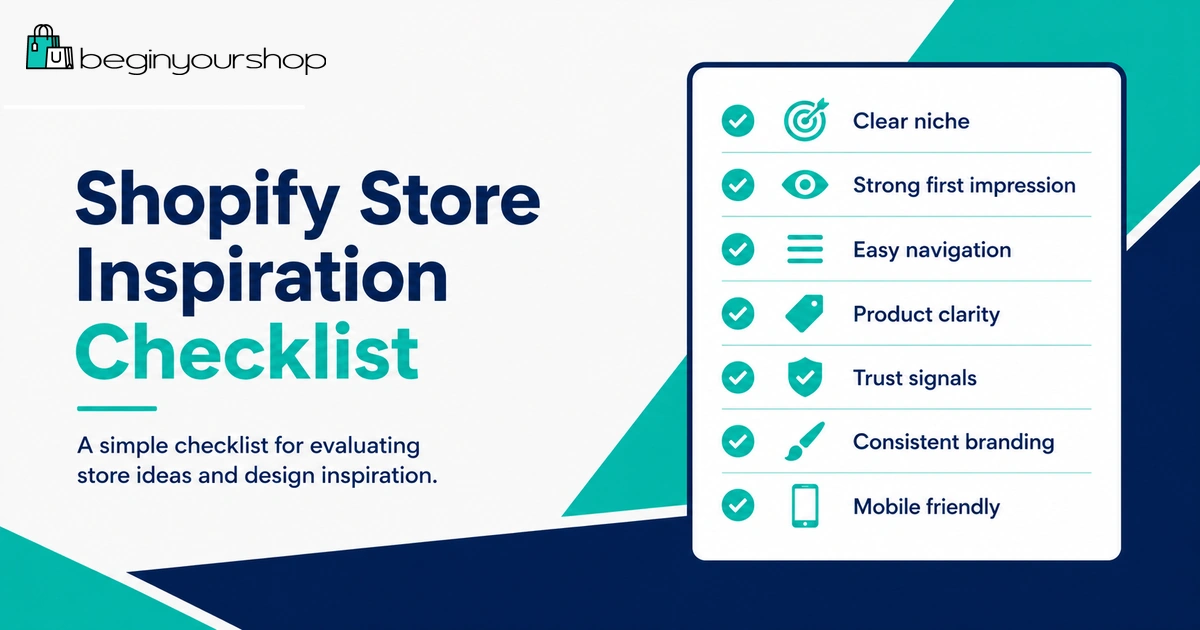
Store Inspiration Checklist
Use this checklist when reviewing Shopify examples.
| Area to review | Questions to ask |
|---|---|
| Homepage | Can I understand what the store sells within a few seconds? |
| Navigation | Are collections and product categories easy to find? |
| Product pages | Do pages answer questions about size, materials, use, delivery, and returns? |
| Images | Do photos show product details, scale, and lifestyle context? |
| Trust | Are reviews, policies, contact details, guarantees, or mission details easy to find? |
| Content | Does the store use guides, recipes, stories, or FAQs to support buying decisions? |
| Mobile | Is browsing and checkout easy on a phone? |
| Offer | Is the product value clear without relying only on discounts? |
| Brand | Do colors, typography, images, and copy feel consistent? |
| Applicability | Which ideas fit my store, and which only work for that brand? |
What Not to Copy
Shopify store examples are helpful, but copying blindly can hurt your store.
Do not copy a homepage just because it looks good
A homepage designed for a famous brand may not work for a new store. Famous brands can rely on existing recognition. New stores need more explanation and trust-building.
Do not copy product photography you cannot reproduce
If the example store uses expensive studio photography, your copied layout may look weak with inconsistent product images. Match your design to your actual asset quality.
Do not copy advanced features too early
Mega menus, subscriptions, loyalty programs, post-purchase upsells, quizzes, and personalization tools can be useful later. They may be unnecessary for a first launch.
Do not copy claims without proof
Mission statements, sustainability claims, product performance claims, and quality claims need support. Use specific, accurate language.
Do not copy a layout that does not fit your catalog
A large catalog layout may overwhelm a small store. A minimalist layout may fail a large catalog that needs filtering.
How to Apply This to Your Own Shopify Store
After reviewing examples, create a simple inspiration document for your own store.
Step 1: Choose three reference stores
Pick one store for visual style, one for product page structure, and one for navigation or content strategy. Do not copy all three. Use them to clarify your direction.
Step 2: Extract principles
Write down principles, not exact designs. For example:
- Use lifestyle images near the top of product pages.
- Add a short founder story on the About page.
- Group products into three simple collections.
- Add an FAQ section to product pages.
- Use clear ingredient or material sections.
Step 3: Build a realistic first version
Your first store does not need to match a mature brand. It needs to be clear, functional, trustworthy, and ready to improve.
Step 4: Test with real users
Ask a few people to review your store and answer:
- What does this store sell?
- Who is this for?
- Would you know what to click next?
- What information feels missing?
- Would you trust this store enough to buy?
Use their answers to improve before launch.
Example-to-Action Mapping
Use this table to turn inspiration into action.
| If you like this type of example... | Do this on your store |
|---|---|
| Mission-led brands such as Tentree or United By Blue | Add a clear impact section, but make claims specific and credible. |
| Material-focused brands such as Allbirds or Rothy’s | Explain product materials, benefits, care, and sustainability details clearly. |
| Craft-focused brands such as Artisaire or Velasca | Show process, maker story, details, and quality signals. |
| Content-led stores such as Uppercase or Wil Yeung | Use guides, stories, tutorials, or recipes to support product discovery. |
| Subscription stores such as Cocolab or Pot Gang | Explain delivery frequency, what is included, cancellation rules, and customer expectations. |
| High-consideration products such as Cowboy | Add product education, video, FAQs, support details, warranty, and risk reducers. |
| Food brands such as Fly by Jing or Taza Chocolate | Show flavor, ingredients, use cases, recipes, sourcing, and freshness details. |
Shopify Store Examples FAQ
What are Shopify store examples?
Shopify store examples are real ecommerce stores built on Shopify or highlighted by Shopify as inspiration. Beginners can study them to understand product presentation, branding, navigation, product pages, trust signals, content, and customer experience.
Should I copy successful Shopify stores?
No. You should learn from them, not copy them. A design that works for one brand may fail for another because products, audience, budget, catalog size, photography, and brand trust are different.
What makes a Shopify store successful?
A successful Shopify store usually has a clear product offer, strong audience fit, good product presentation, trustworthy pages, simple navigation, strong visuals, customer support, clear policies, and a marketing strategy that brings qualified traffic.
What should beginners look for in Shopify examples?
Beginners should study homepage clarity, collection structure, product page details, image quality, mobile experience, trust signals, FAQs, shipping and return information, internal links, and how the store guides visitors toward purchase.
Are famous Shopify stores good models for beginners?
They can be useful, but beginners should be careful. Famous brands often have brand recognition, large teams, professional photography, custom development, and significant marketing budgets. Use them for principles, not exact replication.
Which Shopify store examples are best for apparel?
Fashion and apparel beginners can study stores such as Hiut Denim Co., Tentree, Maguire Shoes, Rothy’s, and Suta for product focus, lifestyle photography, size clarity, sustainability messaging, and brand identity.
Which Shopify store examples are best for food brands?
Food and drink beginners can study examples such as BLK & Bold, Fly by Jing, Taza Chocolate, and Flourist for flavor storytelling, ingredient details, sourcing, recipes, product education, and visual brand personality.
Which Shopify store examples are best for mission-led brands?
Mission-led stores such as Tentree, United By Blue, Pela, GOODEE, and Allbirds can teach beginners how to connect product value with environmental, ethical, or impact positioning. Claims should always be specific and supported.
How many store examples should I review before building?
Review enough examples to understand patterns, but do not spend weeks collecting inspiration. Three to five strong reference stores are usually enough for your first planning stage.
How do I know whether an example is actually built on Shopify?
You can check official Shopify case studies, Shopify blog examples, the Shopify Founder Stories category, Shopify Masters, or use technology lookup tools such as BuiltWith or Wappalyzer. Store platforms can change, so verify current information when accuracy matters.
Final Thoughts
Shopify store examples are valuable when they help you make better decisions. They should not distract you into copying designs that do not fit your product, audience, or budget.
Study how strong stores explain products, organize collections, build trust, use images, support mobile shoppers, and guide customers toward purchase. Then apply only the lessons that fit your own store.
Your first Shopify store does not need to look like a global brand. It needs to be clear, functional, trustworthy, and focused on the customer. Start there, then improve as you learn from real visitors and real sales.
Next recommended guide: How to Choose a Shopify Theme